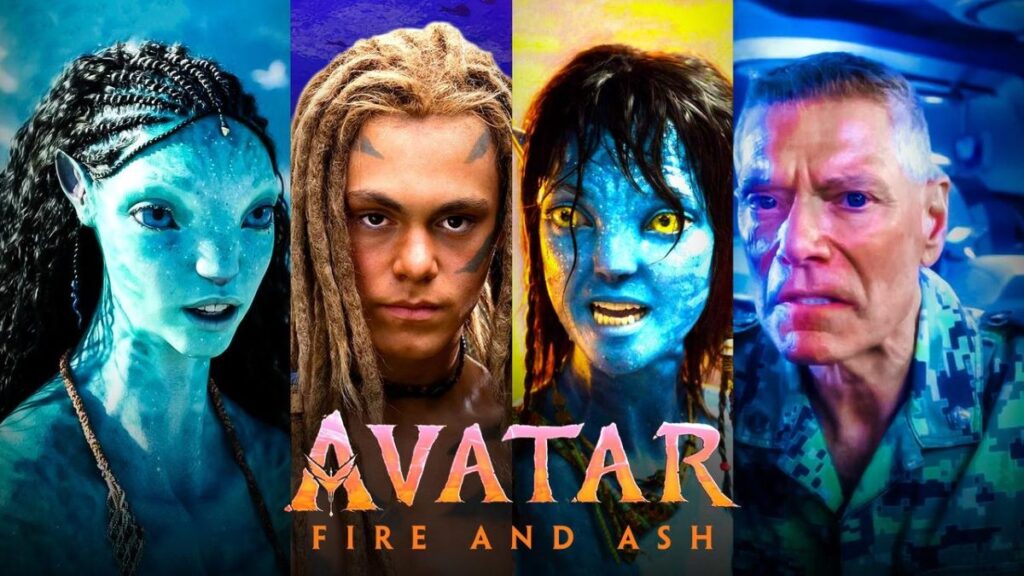

Avatar 3 : Fire and Ash – The wait is over. The first full trailer for James Cameron’s Avatar: The Way of Water sequel has finally descended, and it’s not just making waves—it’s igniting a global firestorm. Titled Avatar: Fire and Ash, this highly anticipated preview throws us headfirst into a conflict far more complex and morally ambiguous than anything we’ve seen before on Pandora. Forget the simple dichotomy of humans versus Na’vi; the rules of engagement have been incinerated. This isn’t just a battle for survival; it’s a war for the very soul of Pandora, and it promises to tear the world—and our heroes—apart.
Avatar 3 Beyond the Water : Introducing the Fiery Heart of Pandora
If The Way of Water immersed us in the lush, flowing ecosystems of the Metkayina clan, Fire and Ash catapults us into a starkly contrasting, volatile environment. We catch glimpses of volcanic badlands, smoldering forests, and landscapes where the earth itself breathes fire. This is the domain of the Ash People, a previously unseen Na’vi culture that has evolved to thrive in conditions of extreme heat and geological unrest.
The genius of James Cameron’s world-building is on full display here. By moving from the ocean’s depth to the volcano’s heart, he fundamentally expands our understanding of Pandora’s biodiversity and the adaptability of its inhabitants. The Ash People are not just “desert Na’vi”; their aesthetic is forged from resilience. Their attire, weapons, and even their iconic creatures appear tougher, sharper, and stained with the soot of their homeland. This visual shift from the vibrant blues and greens to a palette dominated by crimson, black, and orange immediately signals a darker, more dangerous chapter.
Who Are the Ash People? The Antagonists We Never Saw Coming – Avatar 3
The central question burning in every fan’s mind is: Who are the Ash People, and what do they want? The trailer suggests they are far from simple villains. Led by a formidable chieftain portrayed by the formidable David Thewlis, the Ash People represent a radical ideological challenge to the Omatikaya and other Na’vi clans we know.
Early scenes hint at a deep-seated resentment. For the forest and water clans, Eywa is a goddess of life, connection, and harmony. But for the Ash People, who live in a world of constant creation and destruction, their relationship with their deity may be different—one of survival, strength, and perhaps even conquest. The trailer’s most chilling implication is that the Ash People view Jake Sully not as a hero, but as a traitor.
They might see his integration into the Na’vi and his leadership against the humans as an unnatural perversion of the order, or worse, a weakness that has made Pandora vulnerable. This sets the stage for a devastating Na’vi civil war, a concept that adds profound moral complexity to the franchise.
Decoding the Trailer’s Most Explosive Moments – Avatar 3
Let’s break down the key scenes that have set the fandom ablaze:
-
The “Fire Bender” Moment: In a breathtaking sequence, a member of the Ash People appears to manipulate flowing lava, directing it as a weapon. This has sparked intense debate. Is this a previously unseen Na’vi ability, a deep connection to Pandora’s geothermal energy? Or is it advanced technology that the Ash People have mastered? This single moment redefines the possibilities of combat on Pandora.
-
Jake Sully’s New Battle: We see a weathered, determined Jake, his body scarred but his resolve steeled. He is heard in a voiceover saying, “I thought I knew what war was. I was wrong.” This line perfectly encapsulates the film’s theme. The fight is no longer clear-cut. He must now lead his family against his own adopted people, forcing him to question everything he fought for.
-
Neytiri’s Fury Unleashed: Neytiri is shown in a state of raw, vengeful rage, her grief over the losses in the previous films seemingly fueling her. A quick shot suggests she might even be captured by the Ash People, setting up a powerful character arc where she must confront an enemy that mirrors her own capacity for wrath.
-
The Human Factor: While the focus is on the Na’vi conflict, the human presence is far from gone. The trailer hints at an uneasy, potentially opportunistic alliance between the remaining RDA forces and the Ash People. This “the enemy of my enemy is my friend” dynamic could be the most dangerous wildcard of all.
Why “Fire and Ash” is More Than Just a Title – Avatar 3
The title itself is a masterstroke of symbolism. Fire represents destruction, passion, rage, and purification. Ash signifies what remains after the fire—the consequences, the grief, and the potential for new growth. This duality mirrors the internal conflict within the characters, especially Neytiri, and the external war that will leave Pandora forever scarred. It’s a promise that the events of this film will be transformative and irreversible, burning down the old paradigms to make way for something new and uncertain.
The Road to December : What to Expect Next – Avatar 3
The trailer has successfully shifted the narrative from anticipation to urgent speculation. As we count down to the film’s release on December 19, 2025, the marketing campaign will likely delve deeper into the culture of the Ash People and the fractured state of the Sully family. Expect more featurettes, character posters, and perhaps a final trailer that focuses on the emotional core of the story.
For a complete deep dive into the cast and characters, resources like the official IMDb page for Avatar 3 are invaluable for staying up-to-date. Furthermore, to understand the technological leaps Cameron is making, interested readers can explore the Profile in American Cinematographer which detailed the underwater filming breakthroughs of the previous film, hinting at the volcanic-scale challenges of Fire and Ash.
Conclusion : A Universe Forever Changed
Avatar: Fire and Ash is poised to be more than a sequel; it’s an evolution. By introducing a formidable Na’vi faction that operates on a different moral compass, James Cameron is ensuring that the Avatar saga retains its relevance and capacity to surprise. It challenges both the characters and the audience to move beyond simplistic notions of good and evil. The fire has been lit, and when it finally subsides, the world of Pandora will be covered in ash, forever changed. The only question that remains is what will grow from it.


