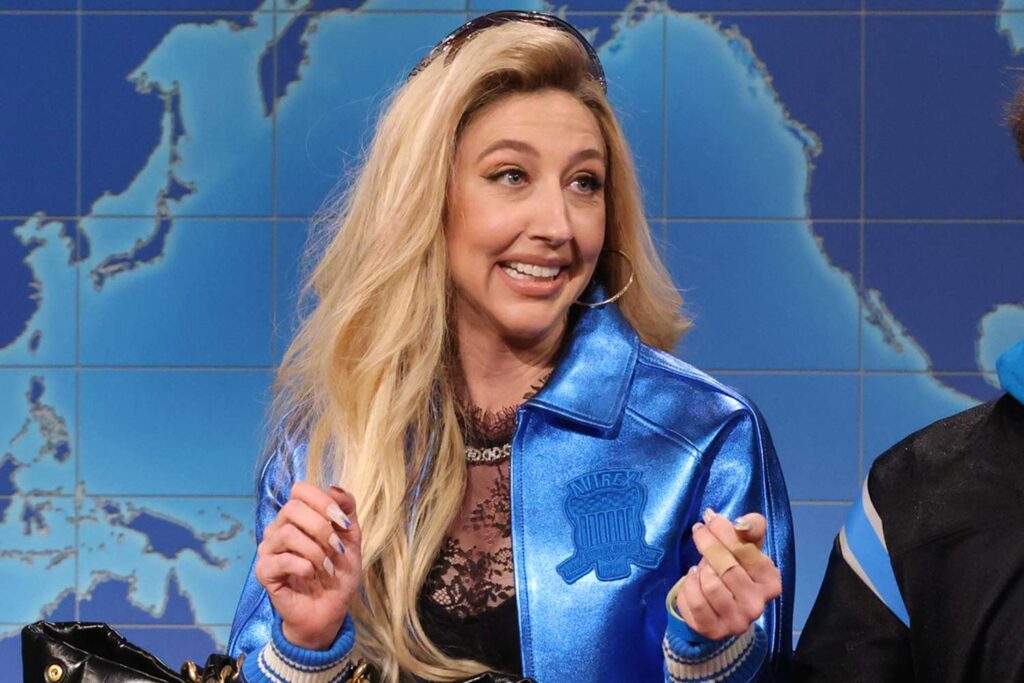

Heidi Gardner’s SNL Exit : The world of live television is a pressure cooker, and for years, Saturday Night Live has been its most famous kitchen. Stars are forged in its fiery crucible, but sometimes, even the brightest flames are extinguished by the environment itself. The recent, seismic departure of Heidi Gardner from the iconic show has sent shockwaves through the entertainment industry, revealing a story far more complex than a simple career move. This isn’t just an exit; it’s a statement, and the echoes of her farewell are forcing a long-overdue conversation about the culture inside 30 Rockefeller Plaza.
For millions, Heidi Gardner was the chameleonic heart of SNL‘s modern era. Her ability to vanish completely into characters—from the awkward, flailing Bailey Gismert on “Weekend Update” to one-half of the gloriously chaotic duo in “Angel, Every Boxer’s Girlfriend”—was a masterclass in comedic commitment. She wasn’t just performing; she was building a legacy one unforgettable sketch at a time. Which is why her decision to leave, reportedly alongside fellow star Michael Longfellow, felt so abrupt and puzzling to fans.
But behind the glitter of Studio 8H, a different story was unfolding. The official narratives of “amicable departures” and “pursuing new opportunities” are often a thin veneer for a more turbulent reality. To understand Heidi Gardner’s choice, we must look at the toxic undercurrents that have reportedly plagued SNL for years, recently brought into stark relief by the blistering farewell of another cast member.
A “Toxic Hellscape”? The Culture Behind the Curtain – Heidi Gardner
Just weeks before news of Gardner’s exit broke, a damning indictment of the show’s internal culture emerged from writer and occasional performer Devon Walker. In a farewell message that resonated across the internet, Walker described the show as a “toxic hellscape,” a phrase that immediately went viral. He detailed an environment rife with intense pressure, creative stifling, and a hierarchy that often left non-star cast members and writers feeling invisible and devalued.
While Walker’s experience is his own, it paints a picture of a workplace that stands in stark contrast to the camaraderie presented on screen. This context is crucial for understanding the potential push factors behind Gardner’s decision. After eight grueling seasons of 80-hour work weeks, constant rejection, and the immense psychological weight of live TV, even the most dedicated performer can reach a breaking point. Gardner, a star by any metric, would not have been immune to this pervasive atmosphere. The question shifts from “Why would she leave?” to “How did anyone last that long?”
The Lorne Michaels Factor : A Changing of the Guard – Heidi Gardner
No discussion about SNL can happen without addressing its legendary creator and producer, Lorne Michaels. For nearly five decades, Michaels has been the unwavering captain of the ship, the final word on every sketch, every cast member, and every aspect of the show’s culture. His management style has been described as both paternal and profoundly detached, a paradox that has undoubtedly contributed to the show’s infamous pressure cooker environment.
In a recent, rare interview on The Late Show with Stephen Colbert, Michaels spoke candidly about the future, hinting at his own potential retirement and the immense challenge of finding a successor. “The show is bigger than any one person,” he stated, yet acknowledged that its identity is deeply tied to his own. This period of transition creates immense instability. For a veteran cast member like Heidi Gardner, the end of the Lorne era might signal the end of the SNL she signed up for. The uncertainty of a new regime, combined with the existing challenges, could have been the final nudge she needed to bet on herself and leave on her own terms.
More Than a Quitter : Heidi Gardner’s Calculated Career Move
To frame Heidi Gardner’s departure solely as a reaction to a toxic workplace would be to undermine her agency and remarkable talent. This is, perhaps more accurately, a powerful calculated career move.
Gardner arrived at SNL as a seasoned improv veteran from The Groundlings, and she is leaving as a bona fide star with a skyrocketing market value. Her recent film roles in projects like The Opening Act and Code 3 have shown her versatility beyond sketch comedy. The entertainment landscape has radically changed since she joined the show in 2017. The rise of streaming platforms, podcasting empires, and a voracious appetite for film and television content means a star of her caliber has more options than ever before.
Leaving SNL is no longer the career risk it once was. It’s a launchpad. Alumni like Andy Samberg, Bill Hader, and Kristen Wiig have successfully parlayed their tenure into massive film and television careers. Gardner, with her impeccable timing, character work, and proven work ethic, is perfectly positioned to follow in their footsteps. She is not fleeing a hellscape; she is graduating from its intense training program to claim her rightful place at the top of the comedy world.
What’s Next for the Queen of Characters ? – Heidi Gardner
So, where does Heidi Gardner go from here? The possibilities are endless. A leading role in a network sitcom that showcases her everywoman charm seems inevitable. A development deal with a streamer for her own quirky, character-driven series is a strong possibility. Or perhaps she’ll follow the podcasting path blazed by former co-stars, building a direct connection with her dedicated fanbase.
Her departure, alongside other key cast members, marks a definitive end of an era for SNL. It forces the show to reinvent itself once again, a process that has been its key to survival for 50 years. The exodus of talent may be a painful symptom of internal issues, but it is also the natural cycle of a show that has always been a temporary home for comedy’s best and brightest.
Heidi Gardner’s exit is a shock, but it’s not a surrender. It is a powerful message from one of the show’s most valuable players that the price of fame and tradition must be weighed against personal well-being and professional growth. She didn’t just leave a toxic situation; she outgrew it. The world of comedy eagerly awaits her next act, and if her time on SNL is any indication, it will be nothing short of legendary.
For more information on the history of Saturday Night Live and its cast, you can visit the official NBC website.
To explore the legacy of Lorne Michaels, The New Yorker offers a brilliant deep dive.
Read the full account of former writer Devon Walker’s experience in his original Twitter thread.


Your point of view caught my eye and was very interesting. Thanks. I have a question for you.