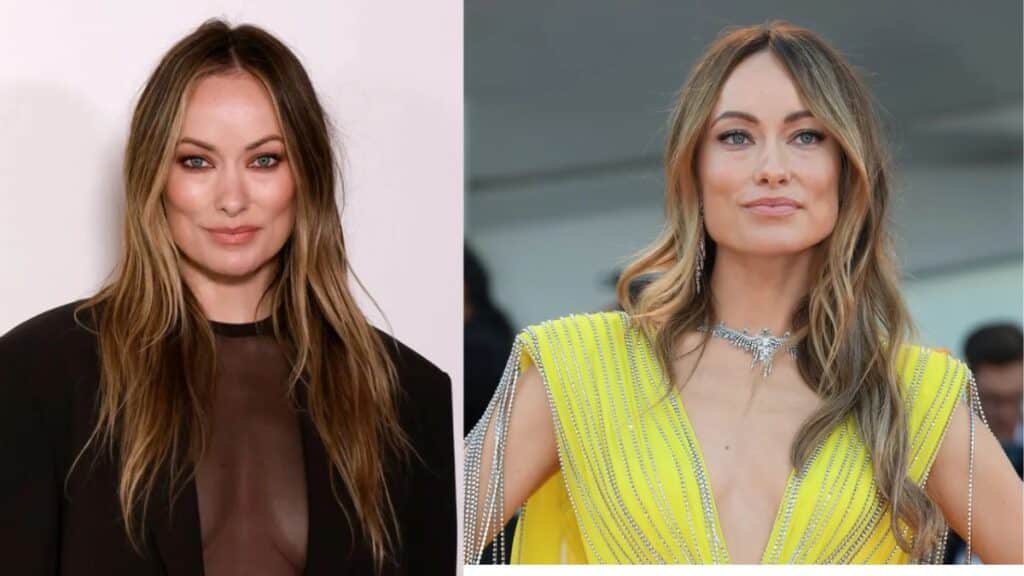

Olivia Wilde’s Big Revelation : It is no secret that Hollywood films are full of sex scenes, but today’s new generation is bored of these scenes. Olivia Wilde, who is known as a talented actress and director, has recently given a new direction to this debate by giving a statement. Speaking in reference to her new film “I Want Your Sex“, Wilde said that sex has not been portrayed in a realistic manner in films for a long time, and a large majority of Gen Z (about 48.4%) believe that there is too much sex and sexual content in TV and movies. He says younger audiences now want to see “real relationships” and something “more real”.
This is not just an actress’s opinion, but it is a sign of a cultural change. Traditional, sentimental and often unrealistic sex scenes are being replaced by thoughtful, uncomfortable, and depictions of human frailty. In this article, we’ll delve deeper into Olivia Wilde’s statement, see how the profession of ‘intimacy coordinator’ in film production is driving this change, and why this change is a lesson not just limited to Hollywood, but for film industries around the world.
Gen Z’s Hunger For The ‘Real’ : The Beginning Of A New Era

Olivia Wilde clarified her point, saying that Gen Z is really intelligent and that she recognizes the “unrealistic” portrayal of sex in films. She considers it a positive “movement”, where audiences are demanding ‘realness’. It’s not just about showing fewer sex scenes, but about showing better and more authentic scenes. This means showing relationships that include vulnerability, shame, and humor, not just bodies steaming on screen.
A study by UCLA has also confirmed this. This figure reflects not just a percentage, but a collective sentiment. Young audiences are tired of the old formula where sex scenes were used only to spice up the story or create dramatic effect. They want meaningful, character-driven, and emotionally accurate scenes for the story.
Increasing Importance Of ‘Intimacy Coordinator’ In Films
This new demand is having a direct impact on the way films are made. For Greg Araki, director of Olivia Wilde’s film “I Want Your Sex”, this was the first project in which he worked with an intimacy coordinator. This profession has gained immense importance in the last few years after the #MeToo movement.
The film’s intimacy coordinator, Judah Duenyas (who also worked on HBO’s “Westworld”), explains that a safe and clear structure gives the actors the freedom to go deeper into their roles. Their job is to address technical concerns and create an environment where actors can focus on their work. Wilde described the experience as being like doing a “dance”, where the feeling of safety gives rise to creativity and “fun”.
Intimacy coordinators are more than just ensuring safety; They have become creative collaborators. They ensure that the intimate scenes move the story forward, show depth to the characters, and do not become mere sensationalism. If you want to learn more about how this profession is changing Hollywood, this article from The New York Times is a great resource.
The Way Forward : Creativity With Reality
So, what’s the way forward for filmmakers? The answer lies in the words of Olivia Wilde and her co-star Mason Gooding. Gooding says sex in real life is often weird and awkward, not just a peak of passion. The truth is that real relationships contain laughter, misunderstandings, and vulnerabilities. These “uncomfortable” moments need to be included in today’s films.
Regarding the film “I Want Your Sex”, artist Chase Sui Wonders said that he hopes the film will give Gen Z “exposure therapy” about the sexual experience and inspire them to pursue it. This does not mean that the quantity of sex in films should increase, but its quality and relevance should increase. This is a challenge for filmmakers, but it is also a creative opportunity. More authenticity means greater depth and the chance to build a stronger emotional connection with the audience.
For further research on this changing relationship between real life and artistic depictions, analysis from the American Film Institute (AFI) provides an interesting perspective.
Conclusion : The Rise Of A New Kind Of Cinema
Olivia Wilde‘s statement is not just part of the promotion of a movie. This echoes a sea change in cinematic storytelling. Gen Z, as a generation that grew up in a digital age, is more aware and demanding. They want to see their complexities, fears and desires reflected in films.
In fact, it is a return to a ‘human’ approach to cinema. It’s not about removing sex scenes, but about making them better. It’s about respecting the relationships that are shown, and respecting the audience that watches them. As Hollywood and the film industry around the world adjust to this new reality, we are headed toward a more rich, diverse, and deeply satisfying cinematic experience. Olivia Wilde has merely given voice to what was already in the air. Now it is the turn of filmmakers to listen to this voice and work on it. #Olivia Wilde


